The Hidden Maintenance Requirement: Digital Service Logs for Claims
Digital service logs are more than just convenience—they are your primary defense against denied VSC claims. Learn how to maintain a verifiable audit trail.
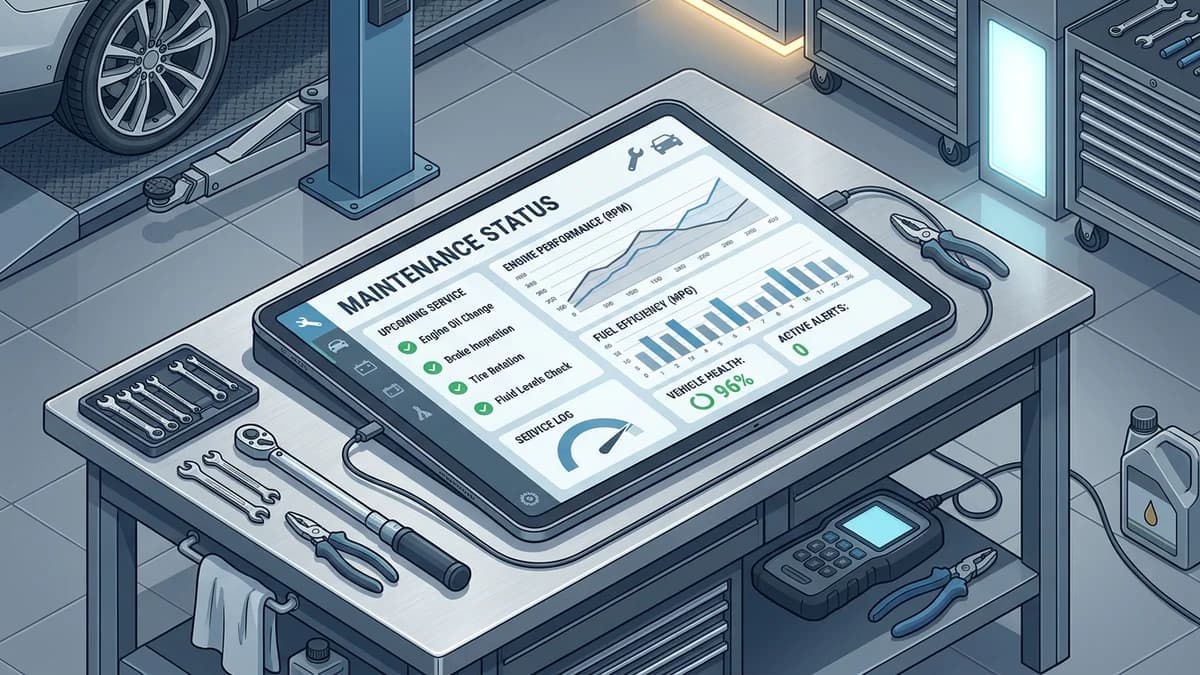
The Digital Paper Trail: Why Your Service History Matters
For many vehicle owners, the transition to digital service records has been a convenience-focused shift. Gone are the days of keeping a cluttered glovebox filled with yellowed oil change receipts. However, as the Vehicle Service Contract (VSC) industry evolves, this shift toward digital-first maintenance tracking has created a new, often overlooked, hurdle for consumers: the burden of proof during a claims audit.
When you purchase a VSC, your coverage is contingent upon adherence to the manufacturer’s recommended maintenance schedule. While this is a standard clause in most contracts—as explained in our explainer—the way that compliance is verified has shifted. Administrators are increasingly moving away from accepting handwritten logs in favor of centralized, verifiable digital data. If you cannot produce a digital trail when a major mechanical failure occurs, you risk having your claim denied on the grounds of "insufficient maintenance evidence."
The Shift from Paper to Digital Verification
Historically, a stack of paper invoices was sufficient to prove that a vehicle had been serviced. Today, VSC administrators utilize sophisticated data-mining tools to verify service history. They often cross-reference claims against national databases, dealer management systems (DMS), and third-party maintenance platforms.
If your service history is fragmented—for example, if you alternate between dealership service, independent shops, and DIY maintenance—the "digital gap" becomes a significant risk.
Why Decentralized Records Trigger Denials
When a repair claim is filed, the claims adjuster is tasked with determining if the failure was caused by a lapse in maintenance. If your service records are scattered across five different apps, three different physical shops, and a home garage, the administrator may struggle to build a cohesive narrative of vehicle health.
- Inconsistent Data: Different shops use different software. If one shop doesn't report to a centralized database, your service history appears incomplete to the administrator.
- The DIY Documentation Trap: DIY maintenance is often permitted under the Magnuson-Moss Warranty Act, but the burden of proof remains entirely on you. Without a structured, timestamped, and verifiable digital log (including receipts for parts and photos of the work), your manual entry may be dismissed as unverifiable.
- Standardization Requirements: Many modern VSC policies specifically require that service be documented in a format that tracks the VIN, date, odometer reading, and specific service performed. If your digital record lacks one of these four pillars, it may not meet the contract's definition of "proof of maintenance."
Best Practices for Maintaining Your Digital Audit Trail
To ensure your VSC remains an effective financial tool, you must treat your vehicle's service history as a legal document. By taking a proactive approach to your maintenance logs, you mitigate the risk of a technical denial.
1. Centralize Your Records
Do not rely on the shop's system alone. Use a centralized vehicle management application that allows you to upload PDFs of invoices. Ensure that every service, regardless of where it is performed, is logged in one place. If you are browsing for coverage, check our pricing-bands to see how different maintenance requirements affect policy tiers.
2. The Four Pillars of Compliance
Every time you log a service, ensure the record contains the following:
- Vehicle Identification Number (VIN): Clearly stated on the invoice.
- Odometer Reading: The exact mileage at the time of service.
- Date of Service: A clear, non-editable timestamp.
- Specific Parts/Fluids: Documentation showing that the products used met or exceeded the manufacturer’s specifications (e.g., specific oil viscosity or filter part numbers).
3. Verify Shop Reporting
If you use a specific independent mechanic, ask them if they report their service data to a national network like CARFAX or a similar service history aggregator. While not required by law, having your service history automatically populate in these databases makes the claims process significantly smoother.
Understanding the 'Maintenance vs. Coverage' Gap
It is vital to distinguish between a service interval and a maintenance requirement. A "service interval" is the recommended time for a routine check-up, while a "maintenance requirement" is the contractual obligation necessary to keep your VSC active. Failure to follow the latter is the single most common reason for claim denials.
For those who prefer to perform their own maintenance, documentation is non-negotiable. You should maintain a digital file that includes:
- Photos of the odometer at the time of service.
- Digital copies of receipts for parts (oil, filters, etc.).
- A contemporaneous log entry describing the work performed.
Conclusion: Proactive Documentation is Your Best Defense
Your VSC is a contract of protection, but it is also a contract of responsibility. As administrators lean more heavily into digital verification, your ability to prove compliance will be the deciding factor in whether a multi-thousand-dollar claim is approved or denied.
By centralizing your records and ensuring they meet the standard of "verifiable proof," you insulate yourself from the administrative pitfalls that often catch owners off guard. For more information on how different coverage levels interact with maintenance requirements, visit our browse section, or check our faq for common questions regarding claim documentation.
Remember, in the world of vehicle service contracts, if it isn't documented, it didn't happen. Protect your investment by keeping your digital paper trail as robust as your vehicle's mechanical components.