How Regular Maintenance Affects Your Warranty Coverage
Discover how adhering to your manufacturer's maintenance schedule is a critical requirement for keeping your vehicle service contract valid and claims-ready.
The Intersection of Maintenance and Warranty Protection
For many vehicle owners, the distinction between a Vehicle Service Contract (VSC) and routine maintenance is a common source of confusion. While a VSC is designed to protect you against the financial burden of unexpected mechanical failures, it is not a substitute for the preventative care your vehicle requires to remain operational. In fact, your adherence to a manufacturer-recommended maintenance schedule is often a strict contractual requirement for maintaining the validity of your warranty coverage.
At OptimalCover, we emphasize that understanding the relationship between upkeep and coverage is essential for any consumer looking to maximize the value of their protection plan. To learn more about how we calculate coverage costs based on vehicle reliability data, visit our methodology page.
The Contractual Obligation: Why Maintenance Matters
Every VSC contains a section detailing the owner's responsibilities. Within these terms, the provider mandates that the vehicle must be maintained according to the manufacturer’s specifications. This is not a suggestion; it is a fundamental condition of the agreement.
If a mechanical failure occurs—for example, a seized engine—the claims administrator will typically request maintenance records. If those records indicate that oil changes were neglected for an extended period, the administrator may determine that the failure was caused by a lack of lubrication rather than a defect in materials or workmanship. In such a scenario, the claim is likely to be denied.
What Constitutes 'Proof' of Maintenance?
To ensure your coverage remains intact, you must maintain organized documentation. Acceptable proof usually includes:
- Dated invoices from a certified repair facility.
- Detailed receipts showing the date, mileage, and specific parts (e.g., oil filters, air filters, fluids) used.
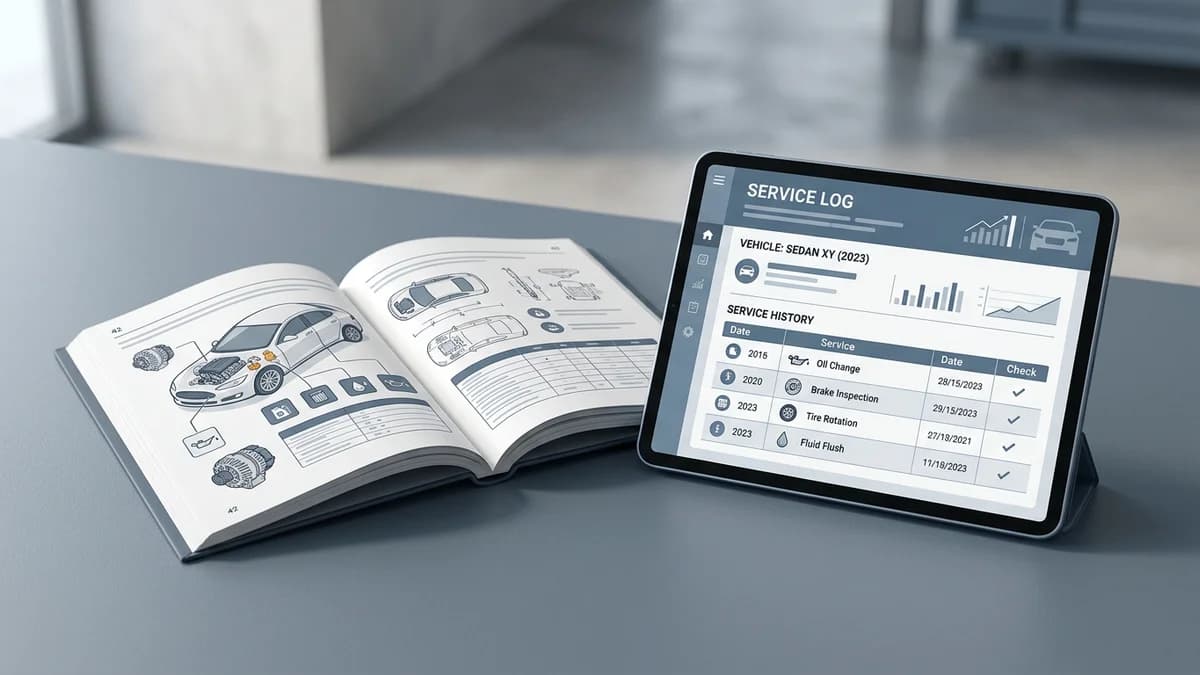
- A comprehensive log that tracks all services performed, ideally matching the intervals listed in your owner's manual.
For those who perform their own maintenance, keep in mind that you must retain receipts for all parts and fluids and maintain a meticulous log. However, be aware that some contracts may require services to be performed by a licensed repair facility to qualify for coverage. Always check your contract's fine print, as explained in our guide to reading VSCs.
Common Misconceptions About Maintenance and VSCs
Myth 1: The Warranty Covers Wear-and-Tear Items
This is perhaps the most persistent myth in the industry. Vehicle Service Contracts are designed to cover mechanical breakdowns, not items that wear out through normal use. Components like brake pads, tires, wiper blades, spark plugs, and clutch linings are considered 'wear items.' Even if you have the most comprehensive 'exclusionary' coverage, you will still be responsible for replacing these items as they reach the end of their service life. For a deeper dive into coverage types, see our guide on Exclusionary vs. Stated Component Coverage.
Myth 2: Maintenance Neglect Only Voids Specific Parts
While this is true in some instances, systemic neglect can lead to the denial of broader claims. If you fail to replace a timing belt at the recommended interval and it snaps, the resulting damage to the engine valves and pistons will likely not be covered. Because the primary cause of the failure was the failure to perform preventative maintenance, the cascading damage is also excluded. This is why keeping your vehicle brand maintenance schedule is critical.
How Maintenance Affects Long-Term Reliability
Regular maintenance does more than just satisfy your warranty provider; it is the most effective way to prevent the very breakdowns that necessitate a warranty claim in the first place. High-mileage vehicles that have been well-maintained often fall into lower risk classes, which can influence how your future VSC is priced. Visit our pricing-bands section to see how vehicle data influences current market rates.
Best Practices for Maintaining Your Warranty Status
To protect your investment and ensure your claims are processed smoothly, follow these professional guidelines:
- Review the Owner’s Manual: The manufacturer’s maintenance schedule is the gold standard. Do not rely solely on the 'oil life' monitor if the manual specifies mileage-based intervals for other critical systems.
- Keep a Dedicated Folder: Whether physical or digital, maintain a centralized repository for all vehicle service records.
- Communicate with Your Shop: When taking your vehicle in for service, explicitly ask the technician to note the current mileage on the invoice.
- Clarify 'Severe' Driving Conditions: Many manuals differentiate between 'normal' and 'severe' driving conditions. If you frequently drive in stop-and-go traffic, tow heavy loads, or live in extreme climates, you may need to follow the more frequent maintenance intervals to keep your coverage valid.
Conclusion: The Synergy of Protection and Prevention
Your Vehicle Service Contract provides a safety net for the unpredictable, while your maintenance schedule provides the foundation for reliability. By treating them as complementary rather than separate, you safeguard your vehicle against both mechanical failure and the risk of denied claims.
If you have further questions regarding how your vehicle's specific history might influence your coverage needs, we encourage you to consult our FAQ for common industry inquiries. Remember, a well-documented maintenance history is your best defense when navigating the claims process.