Vehicle Age and Repair Costs: The Impact on Warranty Value
Discover how the age of your vehicle influences repair frequency and the long-term value of your extended warranty coverage.
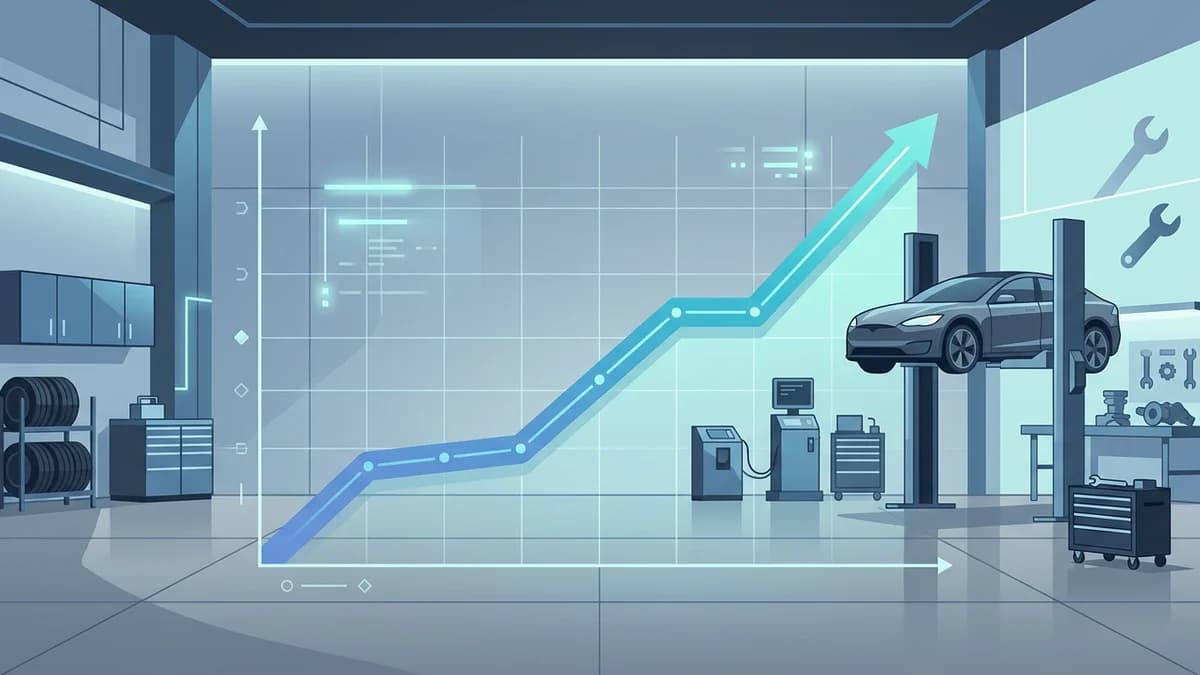
The Lifecycle of Reliability: Understanding Vehicle Aging
When evaluating the necessity of a Vehicle Service Contract (VSC), the age of your vehicle serves as one of the most critical variables in the actuarial equation. As vehicles transition from new, factory-warranted assets to aging machines, the probability of component failure increases, fundamentally altering the value proposition of extended protection. At OptimalCover, we analyze these trends to provide consumers with transparent pricing-bands based on real-world reliability data.
To understand why age matters, one must look at the mechanical lifecycle of a modern automobile. While the "honeymoon phase" of a new car is typically covered by the manufacturer’s limited warranty, the expiration of this coverage marks a significant shift in financial risk. Understanding this shift is essential for any consumer looking to manage long-term vehicle ownership costs.
The Reliability Curve: Why Costs Escalate Over Time
Automotive reliability is rarely linear. Instead, it follows a distinct curve characterized by three phases: the burn-in period, the reliable middle years, and the wear-and-tear phase.
1. The Burn-In Period (Years 0-3)
During the first few years of ownership, most issues are related to minor sensor malfunctions or software glitches. Because the manufacturer’s bumper-to-bumper warranty is active, these costs are typically absorbed by the OEM. Purchasing a VSC during this window is often a strategy to lock in lower premiums, as rates are generally tied to the vehicle's age and mileage at the time of purchase.
2. The Reliable Middle Years (Years 4-7)
This is the period where the original factory warranty expires, yet the vehicle is often still in its prime. However, this is also when rubber components, seals, and cooling systems begin to experience thermal fatigue. Our methodology shows that this is the "sweet spot" for VSC acquisition; the vehicle is old enough to present a genuine risk of failure, but young enough to qualify for comprehensive, cost-effective coverage.
3. The Wear-and-Tear Phase (Years 8+)
As a vehicle crosses the eight-year threshold, the frequency of component failure accelerates. High-mileage stress on transmissions, suspension systems, and complex electrical modules becomes a statistical certainty rather than a possibility. While coverage is still available, the actuarial risk is higher, which is reflected in the pricing-bands for these older vehicles.
How Age Impacts Repair Complexity
It isn't just the frequency of repairs that increases with age; it is the complexity and the cost of the labor required to perform them. Older vehicles often require more time-intensive diagnostics because parts become seized, brittle, or difficult to access.
- Plastic Degradation: Modern engine bays are filled with plastic cooling components, vacuum lines, and electrical clips. Over time, heat cycles make these materials brittle, leading to cascading failures that are expensive to repair.
- Electrical Complexity: Modern vehicles house dozens of Electronic Control Units (ECUs). As these age, they become susceptible to moisture ingress and solder joint failure, which are among the most expensive repairs in the modern automotive landscape.
- Labor Inflation: Even if the part cost remains relatively stable, shop labor rates rise annually. An extended warranty acts as a hedge against this inflation, locking in your cost of protection regardless of future shop rate increases.
Evaluating Warranty Value at Different Stages
When deciding whether to protect your vehicle, it is helpful to use our explainer to understand how different coverage levels align with your vehicle's current age.
If you own a vehicle in the 4-7 year range, an exclusionary (bumper-to-bumper) contract often provides the best value. It covers the complex electrical and mechanical systems that are most likely to fail as the vehicle leaves its "youth." For vehicles beyond 8 years, you may find that powertrain-focused plans offer a more practical balance, focusing on the most catastrophic and expensive repairs like engine and transmission failure.
Data-Driven Decision Making
We encourage consumers to visit our browse section to see how specific brands and models age. Not all vehicles follow the same reliability curve. For example, some luxury European models may show a steep incline in repair costs much sooner than their Japanese counterparts.
Before you commit to any contract, consider the following:
- Verify your current coverage: Ensure your factory warranty has truly expired or is nearing its end.
- Assess your risk tolerance: Are you prepared for a $3,000 transmission repair today? If not, a VSC is a financial risk-management tool.
- Review the terms: Ensure the contract is exclusionary, meaning it covers everything except a short list of specific exclusions. This provides the most comprehensive protection for aging vehicles.
For more answers to common questions regarding coverage eligibility and age limits, please visit our faq page. By understanding the relationship between your vehicle’s age and its inherent mechanical risks, you can make an informed decision that preserves your vehicle’s value and your peace of mind.