Luxury vs. Economy: Warranty Cost Differences Explained
Discover why luxury and economy vehicles have different VSC pricing structures and how parts, labor, and technology impact your warranty quote.
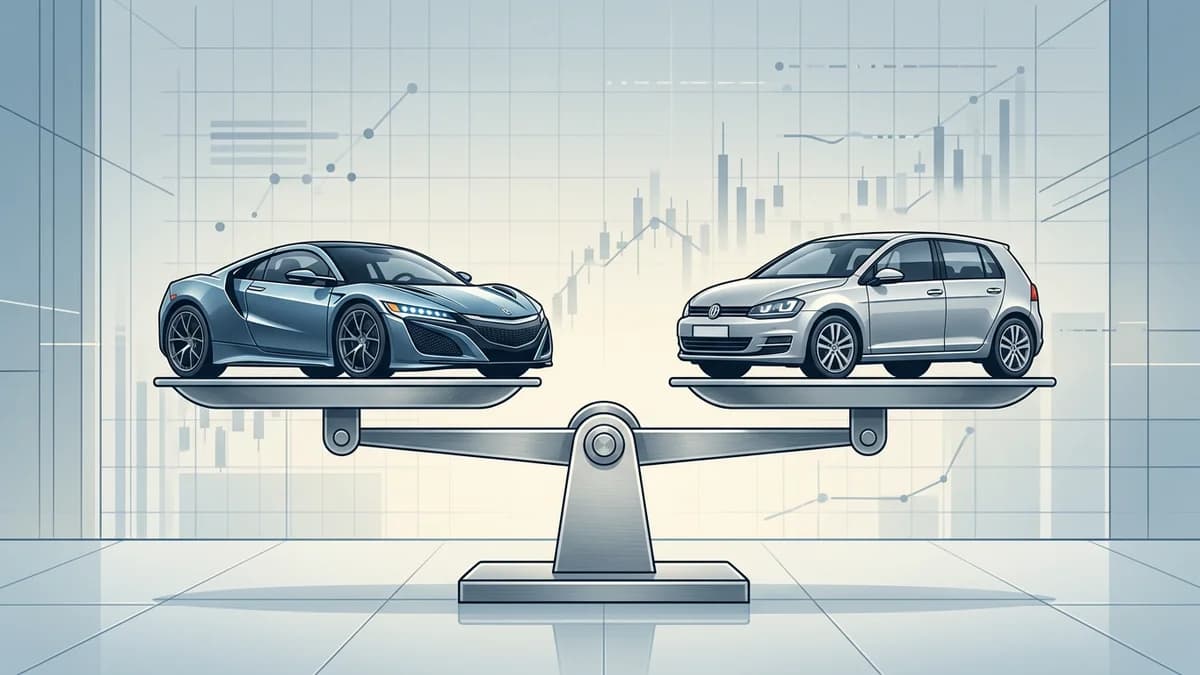
Understanding the Disparity in VSC Pricing
When evaluating the cost of a Vehicle Service Contract (VSC), consumers often notice a significant price gap between luxury marques and economy brands. At OptimalCover, we focus on actuarial transparency to help consumers understand why these differences exist. While it might seem intuitive that a more expensive car costs more to insure, the specific drivers behind these pricing bands are rooted in mechanical complexity, parts availability, and labor-hour requirements.
To understand the full scope of these pricing variations, you can review our pricing-bands to see how your specific vehicle model stacks up against industry averages.
The Complexity Premium
Luxury vehicles—often defined by their integration of cutting-edge technology, forced-induction engines, and advanced suspension systems—require a different level of protection than standard economy sedans or hatchbacks. When an actuary calculates the risk profile for a VSC, they look at several key factors:
- Parts Sourcing: Luxury vehicles often utilize proprietary components that cannot be easily sourced via aftermarket channels. This increases the total claim cost significantly when a repair is required.
- Labor Rates: Certified technicians for premium brands often command higher hourly shop rates, which are directly passed on to the VSC provider during a claim settlement.
- Technological Density: Features like adaptive air suspension, laser headlights, and complex infotainment systems are prone to failure over time, and the cost to repair these items is exponentially higher than standard dashboard electronics.
Why Economy Brands Cost Less to Protect
Economy vehicles are generally engineered with a focus on simplicity and high-volume parts manufacturing. Because these vehicles are produced in the millions, replacement parts are widely available, and labor procedures are well-documented and streamlined.
From a risk perspective, economy cars have a more predictable failure curve. The cost of labor and parts is lower, leading to lower premiums for the consumer. However, it is a common misconception that economy vehicles do not need protection. While the individual repair cost is lower, the frequency of repairs as a vehicle ages can still justify the cost of a VSC. For a deeper dive into our actuarial approach, visit our methodology page.
Key Factors Influencing Your Quote
Regardless of whether you own a luxury SUV or an economy compact, several variables will shift your warranty price. It is essential to remember that VSC providers price based on the expected cost of future repairs.
1. The Cost of Specialized Labor
Most VSC providers will authorize repairs at a standard labor rate. If your vehicle requires a specialty shop or a dealership with a high hourly rate, your policy may be priced higher to account for that variance. If you are unsure how your vehicle's brand impacts your quote, browse our database for historical pricing trends by manufacturer.
2. Parts Scarcity
If a vehicle requires parts that are shipped internationally or are currently backordered, the cost of the repair increases. Luxury vehicles are more susceptible to these supply chain delays, which increases the risk for the insurer and the premium for the policyholder.
3. Reliability Ratings
Not all luxury cars are created equal, and not all economy cars are inherently reliable. Actuarial data tracks the specific failure rates of components across different brands. A luxury vehicle with a proven track record of reliability may have a more favorable pricing tier than an economy vehicle known for transmission or electrical gremlins.
Navigating Your VSC Options
Before committing to a contract, it is vital to understand the difference between exclusionary and stated-component coverage. You can read our explainer on how VSCs function to ensure you are selecting the right level of protection for your vehicle's specific needs.
Many consumers ask, "Is a VSC worth it?" The answer depends on your risk tolerance and the repair history of your specific make and model. We encourage you to visit our FAQ section to address common concerns about claims, coverage limits, and the administrative process of filing a claim.
Final Considerations
Choosing between a comprehensive plan for a luxury vehicle and a powertrain-focused plan for an economy vehicle requires careful analysis. The goal is to align your coverage with the most likely points of failure for your specific vehicle. By focusing on data-driven pricing, you can ensure that you are paying for protection that offers genuine value rather than inflated dealer markups.
Remember, transparency is your best tool. Whether you are driving a high-performance German engineering masterpiece or a reliable Japanese commuter, understanding the "why" behind your warranty quote is the first step toward making an informed financial decision.